✦ Christian V Rum · Journal ✦
From the Caribbean’s “kill-devil” to the world’s language of sugarcane.
Origin, pot still vs. column and the great rum styles — a compact world history of a spirit that shaped empires, navies and manufactories.
Few spirits tell the story of the modern world as vividly as rum. Born from sugar, slavery, seafaring and colonial trade, it became the drink of pirates, navies and emperors – long before it found its place in elegant glasses by the fireplace.
The birth of rum in the Caribbean
Rum as we know it was invented in the early 17th century on the sugar plantations of the Caribbean. The most widely accepted origin lies on Barbados around 1640. Plantation workers and enslaved people discovered that molasses – the dark, viscous by-product of sugar production – could be fermented and distilled into a strong spirit. The first name was as rough as the drink itself: "kill-devil" or "rumbullion".
From Barbados, distillation spread rapidly across Jamaica, Martinique, Cuba, Puerto Rico and Hispaniola. By the 18th century, rum had become the liquid currency of the Atlantic trade, fuelling the infamous triangular trade between Europe, West Africa and the Caribbean.
Sugarcane vs. molasses – two raw materials, two worlds
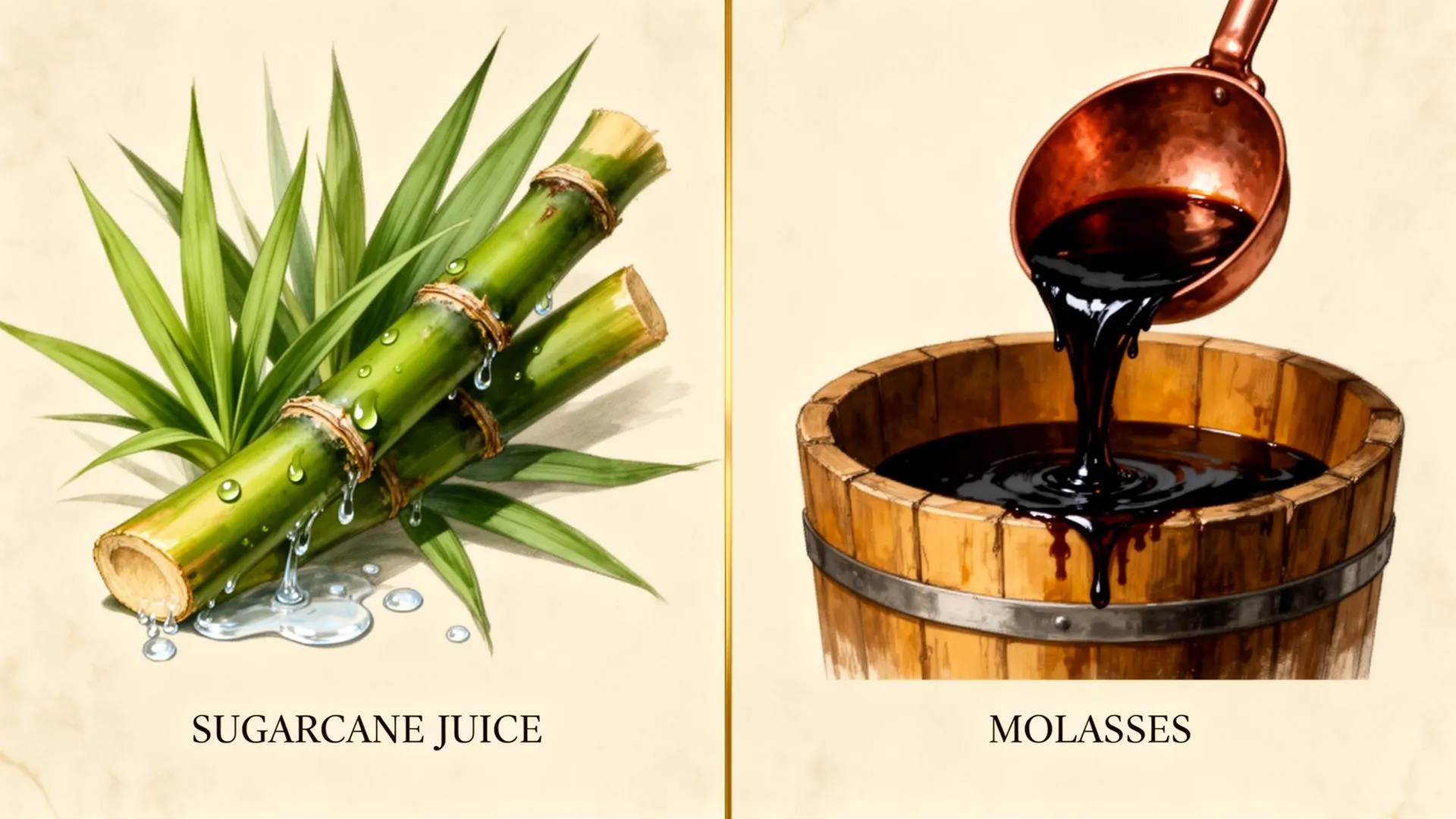
Almost every rum starts with sugarcane, but the part of the plant used defines the style.
- Molasses rum – the classic. The molasses left over after sugar crystallisation is fermented and distilled. Most Caribbean rums (Jamaica, Barbados, Cuba, Guyana) and almost all "traditional" rums – including the Flensburg style – belong to this family. The result: rich, deep, often with notes of caramel, dried fruit and tobacco.
- Pure cane juice rum – the French school. Fresh cane juice is fermented directly, without going through sugar production. This produces lighter, grassier, more vegetal spirits with a clearly recognisable cane character. The most famous representative is Rhum Agricole from Martinique.
- Cane syrup rum – a hybrid form using concentrated cane juice. Common in Haiti (Clairin) and parts of Brazil.
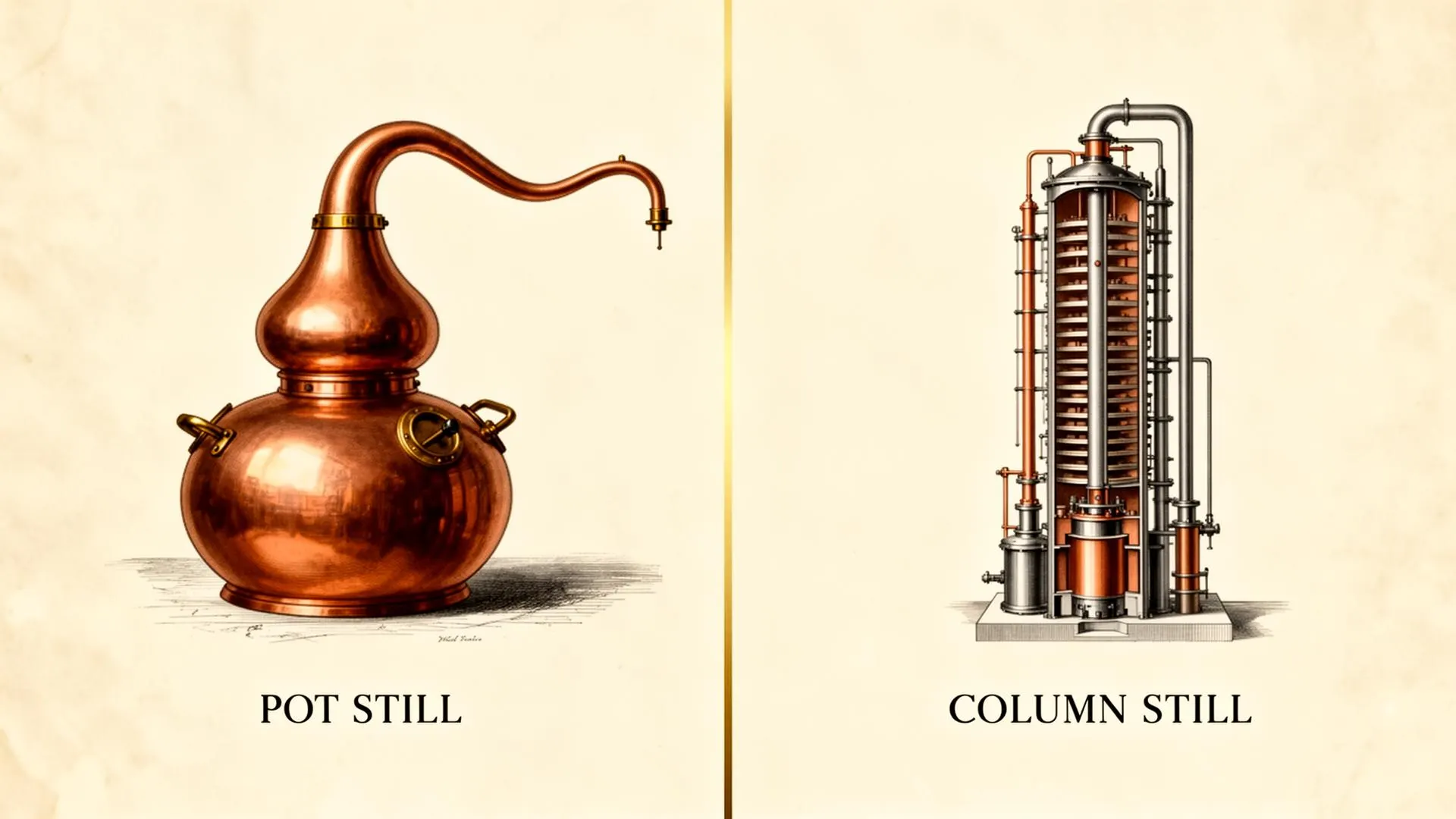
Pot still vs. column still – the soul of the distillery
The distillation method shapes the character of a rum just as much as its raw material.
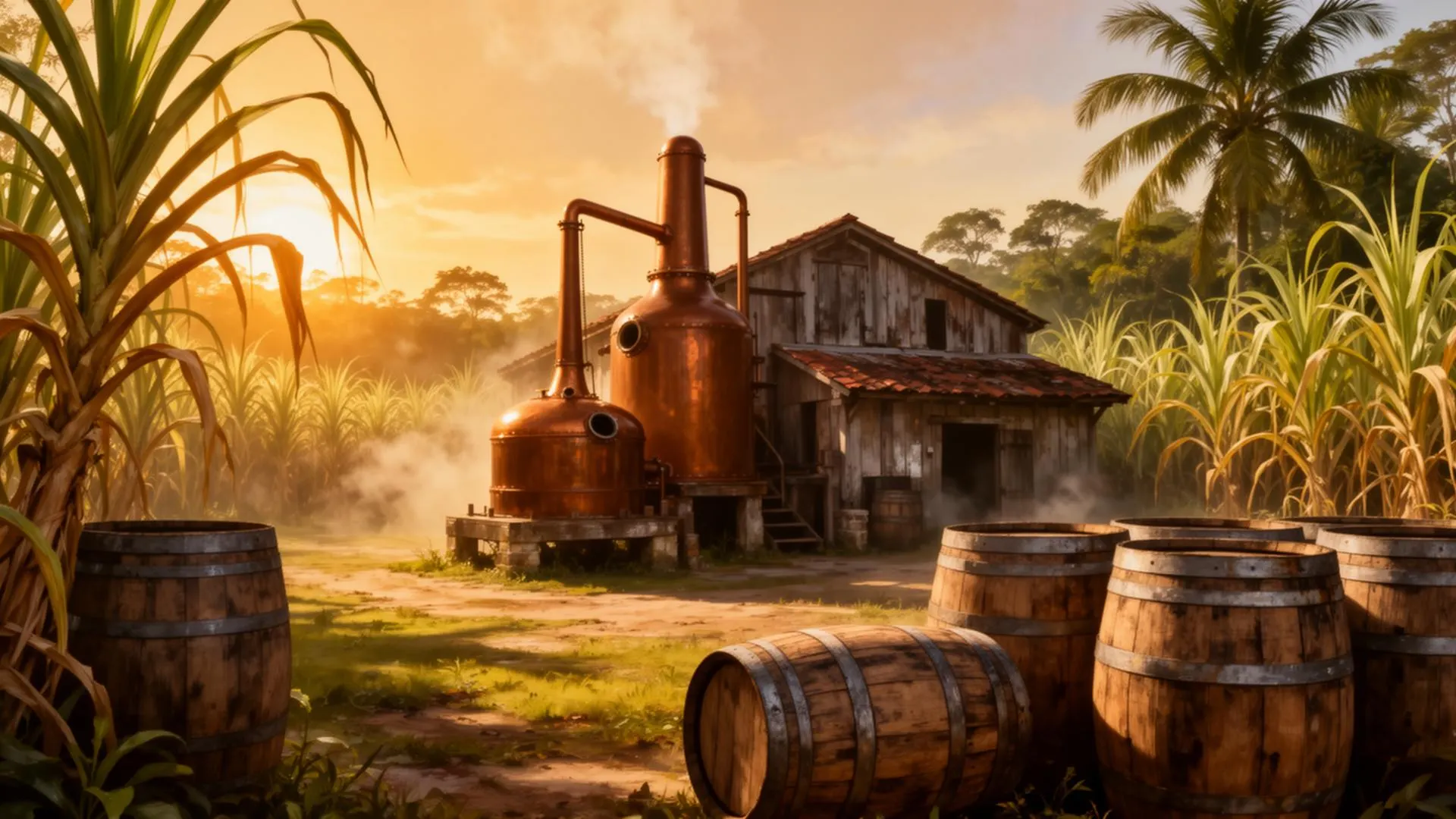
The pot still – a traditional copper pot still – works in batches. It distils slowly, retains many flavour compounds (so-called congeners) and produces full-bodied, aromatic, sometimes "funky" rums. Jamaica is famous for its high-ester pot still rums; Christian V follows this tradition with a triple distillation in copper stills.
The column still – also called the continuous or Coffey still – was developed in the 19th century and works without interruption. It produces lighter, cleaner, higher-proof distillates. Cuban and Puerto Rican rum styles (e.g. Bacardi) are largely built on column distillation. Many modern blends combine both methods to balance complexity and elegance.
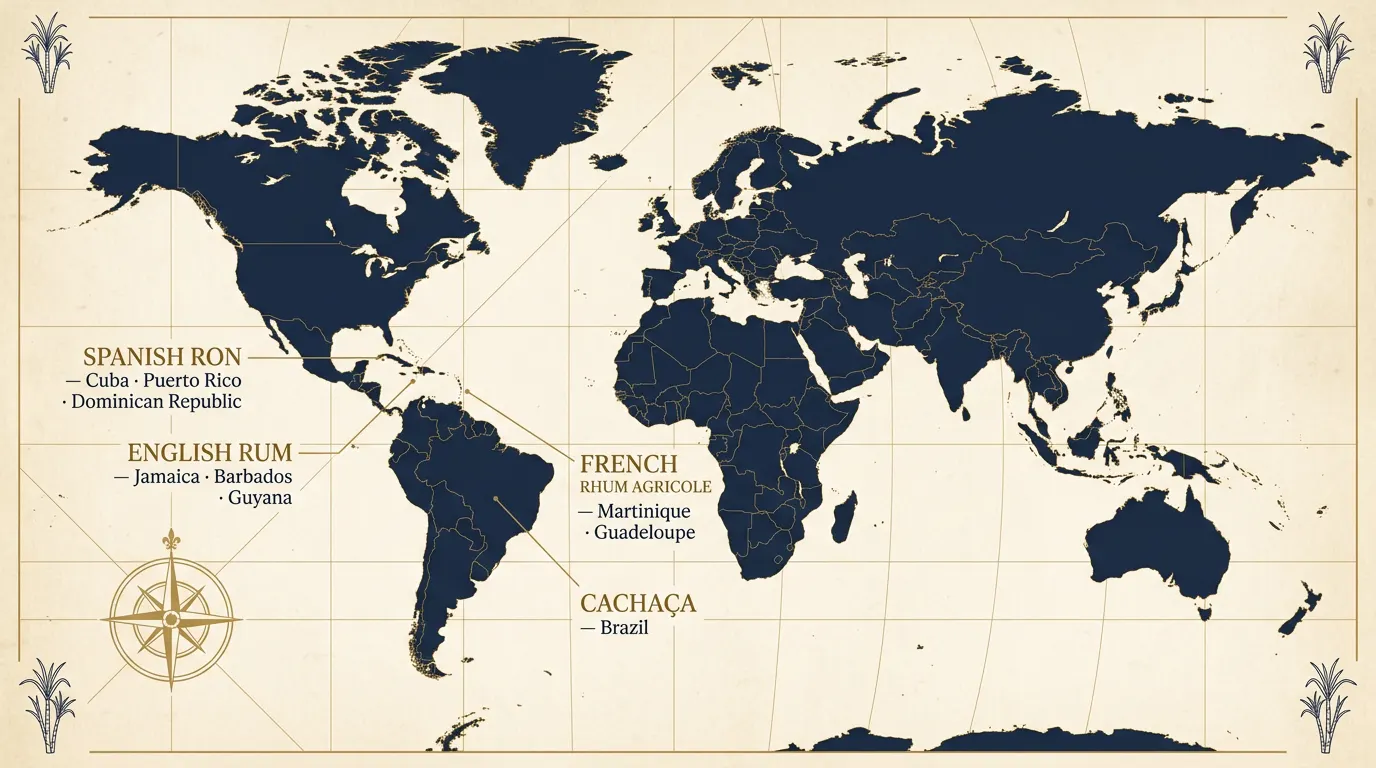
The great rum styles of the world
Rum is the most diverse of all spirits – there is no single global standard, but rather regional traditions shaped by colonial history.
- Spanish style (Ron) – Cuba, Puerto Rico, Dominican Republic, Venezuela. Mostly column-distilled, soft, smooth, often aged in the solera system.
- English style (Rum) – Jamaica, Barbados, Guyana, Trinidad. Traditionally pot still, full-bodied, aromatic, the historic backbone of the British Royal Navy.
- French style (Rhum) – Martinique, Guadeloupe, Réunion. Pure cane juice, often with the protected designation Rhum Agricole AOC Martinique.
- Cachaça – Brazil's national spirit. Made from fresh sugarcane juice but, unlike Rhum Agricole, only distilled once and to a maximum of 48% alcohol. The base of every Caipirinha.
- Clairin – the wild, unaged cane juice spirit from Haiti, often distilled in tiny village stills.
- Cachaça vs. Rum – legally, cachaça is a sub-category of rum, but in flavour it stands on its own: grassy, fresh, slightly funky.
From the Caribbean to Flensburg
For Christian V, this global heritage is more than a footnote. Our rum draws on the English-Caribbean pot still tradition, refined by the centuries-old Flensburg art of blending and ageing in sherry oak casks. The result is a contemporary expression of a 400-year-old story – sugarcane from the tropics, copper from the still, oak from the cellar, and the salt air of the Baltic.