✦ Christian V Rum · Journal ✦
250 years of Caribbean trade, one harbour — and a city that wrote rum history.
How a small Danish port city became Germany's only rum capital — from the Neptunus in 1755 to over 200 rum houses in the 19th century.
The history of Flensburg rum is the history of a small port city on the Baltic Sea that, for over 250 years, was inextricably linked with the Caribbean. It is a story of bold seafarers, shrewd merchants, exotic commodities – and a spirit that defines the identity of a city to this day.
Flensburg Under the Danish Crown
What few people know: Flensburg was part of the Kingdom of Denmark for centuries. As the third-largest port city in the Danish realm, Flensburg enjoyed preferential trading conditions with the Danish colonies in the Caribbean – the islands of St. Thomas, St. Croix, and St. John, known today as the US Virgin Islands.
It was this special position that laid the foundation for Flensburg's rise to become Germany's only "Rum City."
1755 – The Maiden Voyage of the "Neptunus"
The story begins in the year 1755. The Flensburg merchant Johann Gerhard Feddersen, director of the Greenlandic Company, initiated the founding of the "West Indian Company" – officially the "Trading Society on St. Croix in the West Indies." As their very first ship, the merchants acquired a two-masted vessel of 57 commercial loads, christened "Neptunus."
On October 11, 1755, Captain Hans Bleeke of Røm received his sea pass. With a crew of 17 men and a valuable cargo of provisions – bacon, meat, flour, butter, refined sugar, wine, and tea – the Neptunus set sail for St. Croix. It was the very first ship from Flensburg to head for the Caribbean.
The first voyage was a resounding success. The West Indian merchants and colonists were so pleased with the goods that they immediately placed orders for regular supplies. In return, the Neptunus brought brown raw sugar, rum, and tobacco back to Flensburg – laying the foundation for a trade that would last over a century.
Sugar Cane, Rum, and the Triangle Trade
The Caribbean islands had the ideal climate for growing sugar cane. The sugar, traded as "white gold" at exorbitant prices, was a coveted luxury. And from the residual product of sugar production – molasses – enslaved plantation workers developed what would become rum.
Flensburg ships carried not only food and manufactured goods to the Caribbean: nails, machetes, beams, barrel staves, sailcloth, and even yellow bricks from Flensburg brickyards – which served as ballast during the voyage and were used for construction on St. Croix. Some of these buildings still stand on the island today.
The dark side of this trade must not be concealed: the sugar economy was built on the backs of enslaved Africans. By 1797, over 25,000 enslaved people lived on St. Croix alone, compared to just 2,200 Europeans. The transatlantic slave trade was inextricably linked with the sugar and rum trade.
The Golden Age – Nearly One Million Litres Per Year
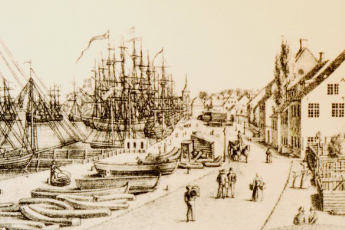
After the Hansa's decline, Flensburg became one of the most important trading cities in the Scandinavian sphere. From the late 18th century, more and more sailing ships crossed the Atlantic, and despite the dangerous sea conditions, piracy, and smugglers, the rum trade flourished.
At the peak of the rum era in the early 19th century, nearly one million litres of rum per year were imported into Flensburg. The Christiansen family alone – one of the most powerful merchant dynasties – could double their fortune between 1783 and 1792. Their ship "St. Croix" was the largest vessel sailing between Flensburg and the Caribbean.
By 1833, 1,400 tonnes of raw sugar arrived in Flensburg annually – the equivalent of 49 modern shipping containers, nearly one per week. The sugar was refined in Flensburg's refineries into various grades: fine raffinade, candy sugar, and sugar syrup. The peak was reached in 1846, when over 60 workers produced 928 tonnes of sugar, 257 tonnes of syrup, and 287 tonnes of candy.
The Flensburg Rum Houses
From this booming trade emerged the legendary Flensburg rum houses. At their peak, more than 20 rum houses operated in the city – names like Hansen, Pott, Asmussen, Sonnberg, Dethleffsen, and Johannsen defined the identity of the city for over two centuries.
These houses developed a unique art: Flensburg Rum Verschnitt (blended rum). Since exorbitant import duties were levied on spirits, the merchants began mixing a small proportion (up to 5%) of high-proof original Caribbean rum with neutral grain spirit and specially flavoured "German Flavoured Rum." The result was a legal and affordable product – "German Rum" – that launched a new golden age for the trade.
1864 – The Great Turning Point
After the Danish-Prussian War of 1864, Flensburg became German – and lost its privileged access to the Danish colonies. The trade route shifted: instead of from St. Croix, raw rum was now sourced via London and Amsterdam, and later from British Jamaica.
Industrialisation brought shortened storage times and higher production volumes. But by the 1880s and 90s, the decline of the legendary rum houses began. One by one, the great names fell silent. Today, only the A. H. Johannsen rum house in Marienstraße survives, with over 130 years of unbroken tradition.
The Colonial Heritage in the Cityscape
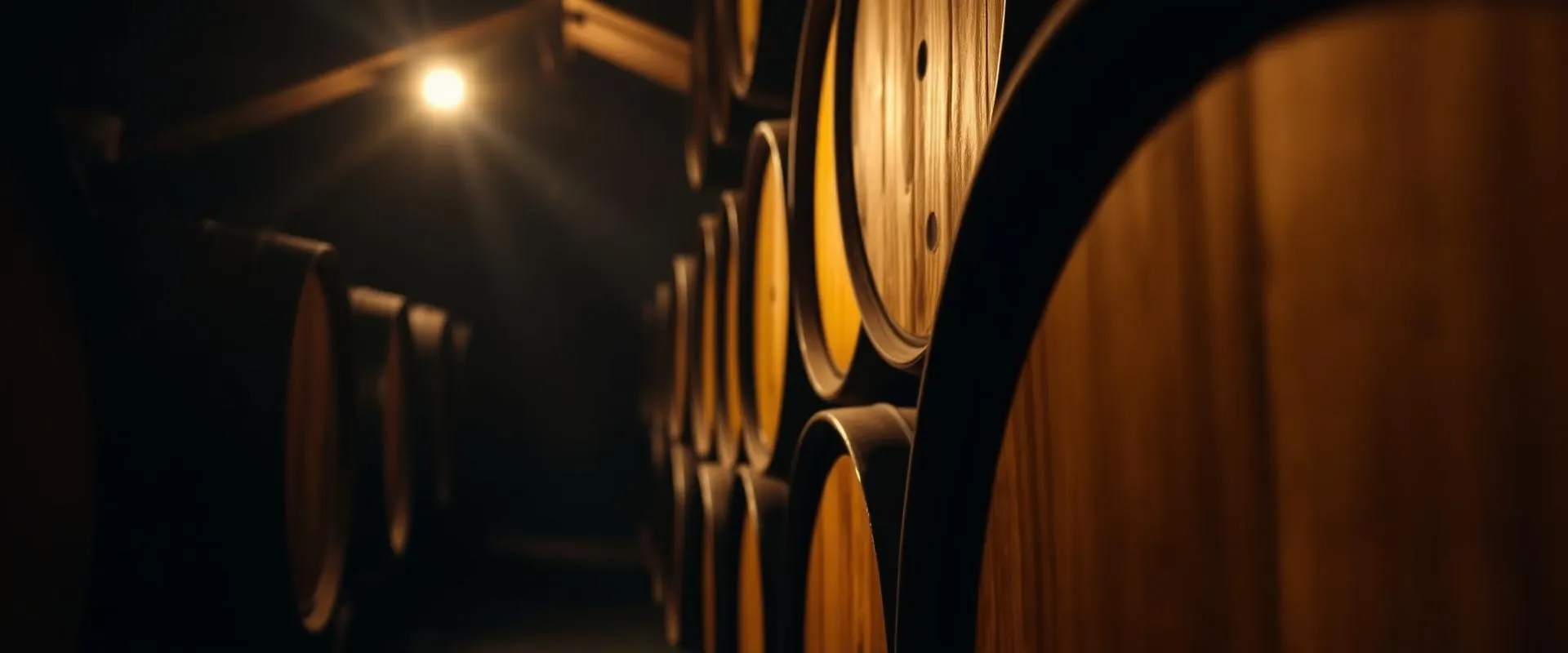
The traces of rum history are visible everywhere in Flensburg to this day. The "Westindienspeicher" (West India Warehouse), built by Andreas Christiansen in 1789, stored colonial goods – raw sugar in sacks, rum in heavy oak barrels, tobacco, cocoa, and spices. Today it houses flats, but the original gable crane still hints at its original purpose.
The distinctive narrow merchants' courtyards along the harbour were built and expanded with profits from the colonial trade – and today offer cosy cafés, shops, and apartments. The "Rum & Sugar Mile" offers a fascinating historical walk through the old town. And the Flensburg Rum Museum – Germany's only museum dedicated entirely to rum – tells this extraordinary story from beginning to end.
A Living Legacy
After nearly 250 years, rum tradition in Flensburg appeared to be coming to an end. But in recent years, a new movement has emerged. The renovated Rum Museum, new manufactures, and brands like Christian V Rum are reviving the spirit of the Flensburg rum tradition – this time with authenticity, craftsmanship, and respect for history.
Christian V Rum takes up this legacy: triple-distilled from the finest Caribbean sugar cane, aged in sherry oak casks, bottled in Flensburg harbour. A rum that honours the king who once made all of this possible.
Long live the King.
Continue exploring: learn more about Christian V, the king behind the bottle, see how the spirit is distilled in Angeln and matured in Flensburg harbour, or visit the surviving institutions of Flensburg's rum era – the Flensburg Maritime & Rum Museum, the historic Rumhaus A. H. Johannsen and the annual Rum-Regatta.