✦ Christian V Rum · Journal ✦
One fjord, two languages — lion and eagle on the same crest.
How Flensburg switched between Denmark and Germany, why the border region remains bilingual today — and what the Christian V crest reveals about it.
Few cities in Europe wear their history as visibly as Flensburg. Here on the fjord, where the water cuts deep into the land, two worlds have met for centuries – the German and the Danish. It is a border that exists not only on maps, but in languages, schools, clubs, coats of arms – and in the glass.
A city that switched nations
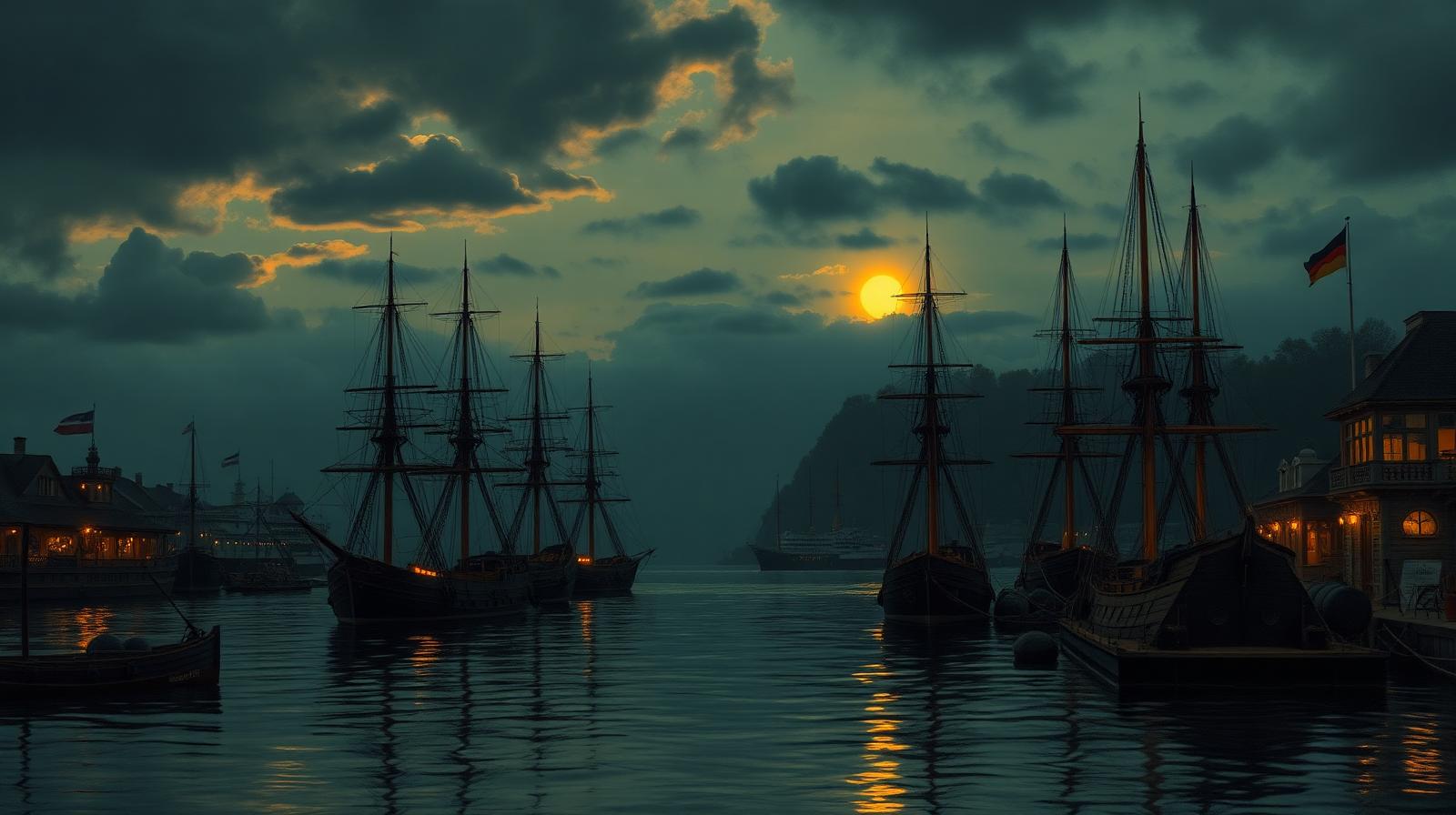
For centuries Flensburg belonged to the Danish realm. It was here, in the north of the kingdom, that merchants sent their ships to the Danish West Indies; here that rum, sugar and prosperity rolled across the fjord. Only with the Second Schleswig War of 1864 did the city pass to Prussia – a rupture that still echoes today. After the First World War, a referendum in 1920 redrew the border: Flensburg remained German, Northern Schleswig became Danish. A border drawn with ballots rather than bayonets.
One region, two languages
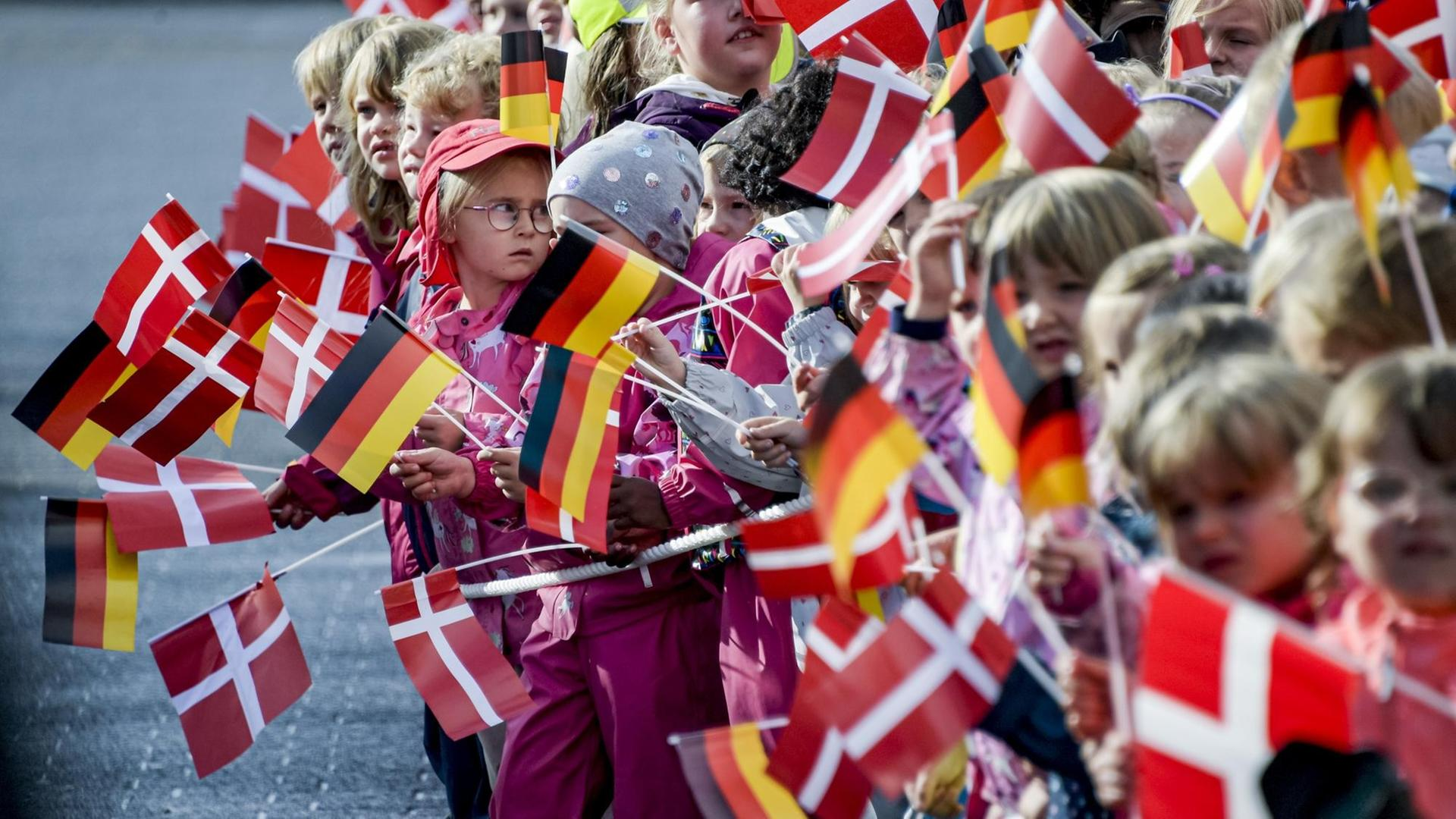
What remained was a region that does not know either-or, but both-and. Around 50,000 people on the German side today identify as part of the Danish minority. They send their children to one of the many Danish schools, read the Danish-language newspaper "Flensborg Avis", and meet in Danish parishes and sports clubs. Across the border, in Sønderjylland, a German minority lives with its own schools and cultural houses.
The SSW – political voice of the minority
Politically, this character finds its voice in the South Schleswig Voters' Association (SSW), founded in Flensburg in 1948. As the party of the Danish and Frisian minority, the SSW is exempt from the five-percent threshold – a singular status in German politics. In 2021, the SSW returned to the Bundestag for the first time in decades. And in Flensburg itself, Simon Faber served as a Danish lord mayor from 2011 to 2017 – in a German city. A quiet but remarkable moment.
Lion and eagle – a crest tells the story
This double identity is carried in the Christian V crest as well. The lion stands for Denmark – the kingdom Christian V ruled and which shaped Flensburg like no other power. The eagle stands for the German and Austrian heritage – for the era in which the city became part of the German Reich, and for the neighbourhood that endures today. Two heraldic animals, two histories, one glass. Just like Flensburg itself.
Christian V is neither a German nor a Danish rum. It is a Flensburg rum – which means: it is both.